Your facility requires consistent cleaning schedules customized for unique hazards, daily throughput, food allergens, and inspection schedules, with verifiable documentation validating HACCP requirements, inspection compliance, and public health regulations. The details below give details about essential cleaning protocols.
Important Highlights
- Sanitation technicians from Brampton service restaurants, grocery departments, commissaries, warehouses, bakeries, schools, mobile vendors, and allergen-sensitive operations.
- Cross-contamination reduction is accomplished by disinfecting high-touch surfaces, food-contact equipment, kitchens, floors, drains, restrooms, and storage areas with sectional methods.
- Approved sanitizer dilution, alignment, and exposure duration are verified by trained specialists, with conclusion recorded via tests, reviews, and remedial documentation.
- Risk, throughput, switches, releases, and regulations should inform cleaning schedules, with routine, periodic, and cyclical operations designated by area.
- Choose contractors with hazard analysis knowledge, public-health, competency, WHMIS, education, liability, credentials, colour-coded instruments, and audit-ready maintenance paperwork.
Food Safety Cleaning Requirements for Brampton Facilities
Food safety cleaning is mandatory for any Brampton facility that manages, stores, prepares, packages, or distributes food. Apply it to your establishment if it comes under public health inspection, food premises regulations, or internal HACCP-based controls. This includes food service venues, employee dining, supply facilities, retail sections, butcheries, seafood counters, retail shops, and facility kitchens.
You'll also need compliant food safety cleaning in warehouses, food manufacturing plants, cold storage sites, retail bakeries, school nutrition programs, banquet halls, and meal delivery hubs. Portable business models matter as well, like food trucks, event sellers, and temporary stalls. When your team handle raw materials, divide prepared dishes, warm finished meals, or maintain allergen storage, your establishment requires established hygiene documentation. In Brampton, food safety stays mandatory; it represents statutory, functional, and public health compliance.
What Services Do Brampton Cleaning Experts Provide?
Your facility requires professional cleaners who disinfect frequently contacted surfaces, cooking and food prep areas, all floor types, and restrooms to maintain food safety compliance and public health standards. These specific areas are emphasized because they represent the most significant contamination risk, trip and slip dangers, and breaches of sanitation codes.
Understanding their cleaning procedures allows you to confirm your operation's sanitation satisfies operational demands and regulatory compliance.
Focusing on High-Touch Surface Disinfection
set how regularly each surface is sanitized
Preventing cross-contact by swapping cloths, using directional cleaning patterns, and organizing disinfection materials by area maintains your cleaning plan remains verifiable, documented, and ready for inspection.
Cooking Zones, Walking Surfaces, and Restroom Environments
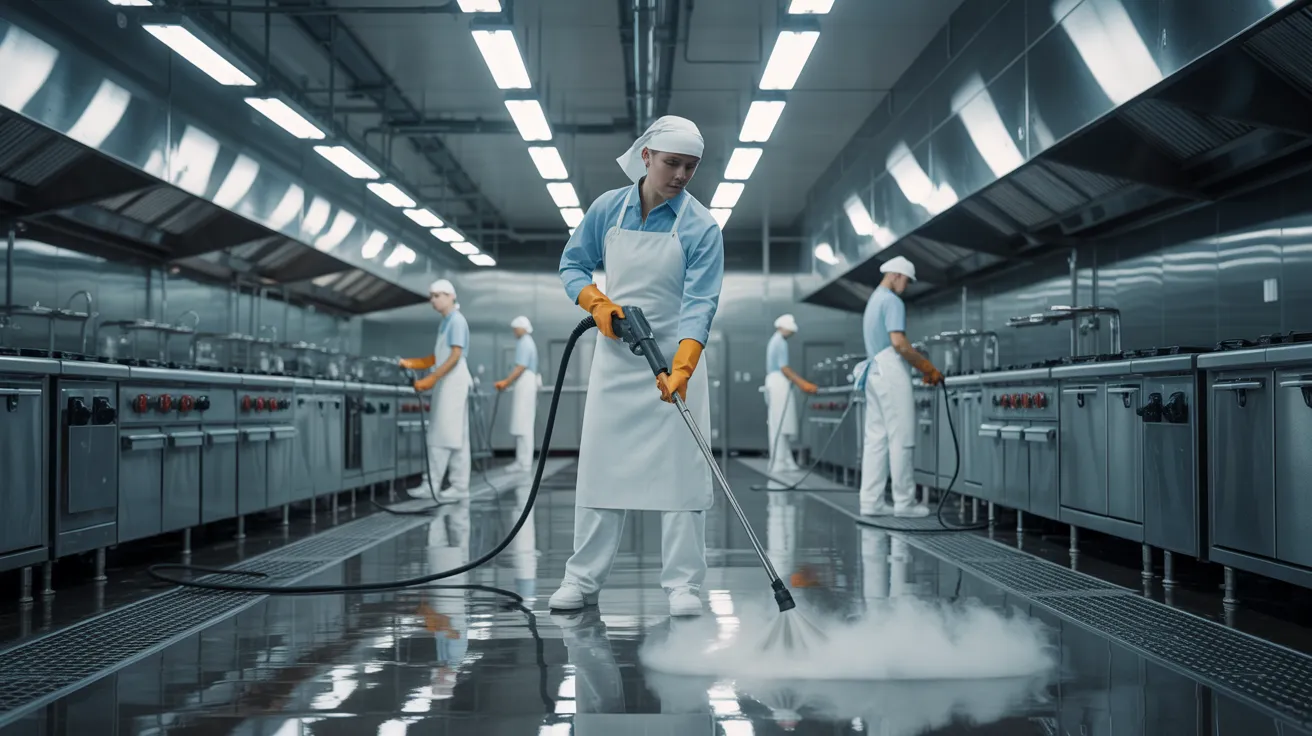
Professional cleaners in Brampton concentrate on kitchens, floors, and restrooms given that each location involves specific contamination control, falling hazards, and health code requirements. In industrial kitchens, you need grease removal from cooking stations, appliance surfaces, drain systems, preparation areas, and backsplashes to minimize contamination and pest pressure.
You should also expect documented floor care. is also provided as part of the service.
Restroom cleaning involves sanitizing touchpoints, fixtures, partitions, dispensers, and waste containers, restocking supplies and controlling odours. They also maintain restaurant cleaning supply rooms where product storage, sink cleanliness, and drain systems impact daily sanitation standards and worker protection.
The Importance of Food Safety Cleaning in Brampton
Brampton operations require food-safe cleaning standards to meet compliance obligations and pass audits. You also minimize bacterial spread through proper cleaning of food-preparation surfaces, appliances, and frequently-touched items. Most importantly, you safeguard public health by lowering the risk of foodborne illness in your facility.
Sanitary Standards Adherence
Because Brampton food businesses operate under stringent health requirements, food safety cleaning directly affects your capacity to satisfy health code requirements, safeguard customers, and avoid enforcement action. You must maintain hygienic food handling zones, recorded sanitation plans, proper chemical use, and auditable operational standards that align with municipal and provincial inspection expectations.
Inspectors evaluate your operation to verify that your cleaning procedures maintains secure product handling, tool sterilization, garbage disposal, and restroom sanitation.
Contamination Prevention
Maintaining regulatory compliance copyrights on your capacity to prevent cross-contamination during everyday food preparation and sanitation. You must separate raw ingredients from ready-to-eat foods, sanitize prep surfaces between tasks, and store chemicals away from food-contact items. Explicit protocols lower contamination threats and reinforce steady regulatory adherence.
Building allergen segregation prevents key allergens from reaching common workstations, storage, or apparatus. Utilize dedicated cutting boards, color-coded tools, and precise instrument labeling so team members won't blend products in cooking or serving.Mandate hand cleaning following uncooked meats, shellfish, egg items, or allergen substances. Refresh cleaning cloths frequently, and confirm disinfectant efficacy using test strips. When you train staff to follow these controls each shift, you foster a cleaner, more secure operation that exceeds Brampton's safety standards consistently.
Public Health Safeguarding
When sanitation protocols fails, you don't just risk a failed inspection—you increase the chance of foodborne illness affecting customers, staff, and the wider Brampton community. You also weaken your role in protecting public health, especially in busy food facilities where contamination can spread quickly through surfaces, equipment, and touchpoints.
You require cleaning procedures that eliminate soils, disinfect correctly, and verify outcomes. This involves adhering to exposure times, utilizing approved disinfectants, documenting procedures, and instructing staff to meet regulatory standards. These controls promote pathogen reduction by decreasing microbes before reaching food or hands. Across Brampton, strong cleaning safeguards vulnerable groups, reduces disease potential, and demonstrates accountability. When you maintain proper protocols, you go beyond requirements—you substantially lower hazards and enable safer food service throughout the area.
Why Is Cleaning Essential for Food Safety Compliance?
Prioritizing rigorous cleaning routines solidifies food safety compliance by decreasing contamination threats, managing pathogen expansion, and positioning your facility in accordance with sanitation requirements under HACCP-based programs and public health regulations. You ensure that food-handling surfaces appear visibly clean and microbiologically controlled, enabling documented preventive controls and inspection readiness.
Proper cleaning procedures also strengthen allergen mitigation by eliminating residues that can provoke undeclared allergen exposure.
When Ought You Plan Commercial Cleaning?
spill incidents, and following-maintenance work
You should also arrange periodic tasks independently
What Should You Look For in Brampton Cleaning Experts?
Start by screening providers against food sanitation standards, not cost only. You should verify that each company understands CFIA, public health, and HACCP compliance standards relevant to your facility. Ask for proof of insurance, WHMIS compliance, documented staff training, and supervision practices. Review whether technicians understand contamination prevention, chemical handling, and traceable sanitation records.
You must also evaluate operational reliability and accountability. Seek references from food facilities in Brampton, then assess response times, corrective-action procedures, and communication standards. similar article Ensure the company supports supplier audits and can provide inspection-compliant records when authorities or third parties demand verification. Verify equipment is maintained, colour-coded tools are deployed correctly, and site-specific hazards are understood. A reputable service protects compliance, product safety, and your brand reputation.
Which components are part of a hygiene cleaning program?
Establish a documented program that clarifies every sanitation task, standard, and responsibility before production begins. You should list cleaning frequencies, approved chemicals, dilution rates, contact times, tools, and verification methods for each zone, surface, and piece of equipment. Make sure to include pre-operational inspections, corrective actions, and employee training requirements.
Your strategy should also tackle prevention of contamination, waste management, pest-control tactics, and scheduled records for facilities, drains, flooring, and food-preparation surfaces. Outline how you'll distinguish between uncooked and prepared items, support ingredient tracking, and maintain accurate allergen labeling through validated cleaning between product changes. You should establish accountability, keep signed records, and assess results against regulatory standards, HACCP controls, and customer requirements. When gaps appear, modify procedures immediately and retrain staff.
Regular Posed Inquiries
Will sanitation providers handle nighttime hours at Brampton properties?
If you run controlled spaces, you'll also require documentation that support inspections and ensure compliance.
Can Brampton cleaning experts handle hazardous incidents?
Yes, you can locate Brampton sanitation experts providing hazard containment services. They handle hazardous incidents, assess dangers, contain affected zones, and initiate rapid cleanup to minimize exposure and avoid operational impact. You should confirm timeframes, certifications, safety protocols, and disposal methods. If your facility must adhere to regulations, select a service that tracks incidents, adheres to standards, and ensures audit compliance.
Can plant-based disinfectants be utilized safely on food-contact surfaces?
Yes, plant-based sanitizers can be suitable for food-contact surfaces if you choose items marked food-safe and satisfying regulatory requirements. You should verify contact duration, dilution rates, and rinse procedures before use. Many plant-derived products minimize chemical hazards, but you still need proof of efficacy against harmful bacteria. To preserve residue-free areas, you need to follow manufacturer instructions exactly and ensure the disinfecting agent meets food industry regulations.
Can cleaning schedules change with seasonal production changes?
Yes, you can modify sanitation programs for production fluctuations. You should revise intervals, personnel, chemicals, and validation steps to align with operational cycles while maintaining regulatory adherence. You'll minimize operational delays by scheduling cleaning around production shifts, peak volumes, and operational patterns. You should further modify standard operating procedures, training, and facility monitoring to account for periodic risks, emerging allergens, or increased soiling. Regular reviews keep your schedule current.
Do professional cleaners coach staff members in proper hygiene techniques?
Certainly, professional cleaning experts coach your employees on hygiene protocols. You obtain staff training on correct chemical practices, processing times, cross-contamination prevention, equipment disassembly, and documentation. They generally coordinate coaching with HACCP, GMP, and CFIA or regional health bodies standards. Many also run sanitation audits to verify compliance, uncover shortcomings, and strengthen corrective measures. This enables you to copyright standard processes, pass inspections, and reduce food safety risks every day.
Summary
Through working with Brampton food safety and commercial cleaning experts, you do far more than tidy—you ensure your facility for inspections and your standards meet requirements. From kitchen spaces to processing areas, all maintained surfaces and organized zones help prevent pest problems and prevent significant costs. Through booking service at proper intervals and sticking to a solid cleaning plan, you safeguard employees, clients, and your good name. In a tightly controlled regulatory landscape, clean conditions must be a priority—they represent good business practice.